


.png)
What Does It Take to Escape Being Average?
Mike's answer is not talent or luck. It is a relationship with discomfort that most people never build. Early on, he learned to treat comfort as a warning sign. He used it as a daily gauge: if he felt comfortable in what he was doing at any given moment, he took that as a signal he was probably working on the wrong activity. So he went looking for the uncomfortable thing on purpose.
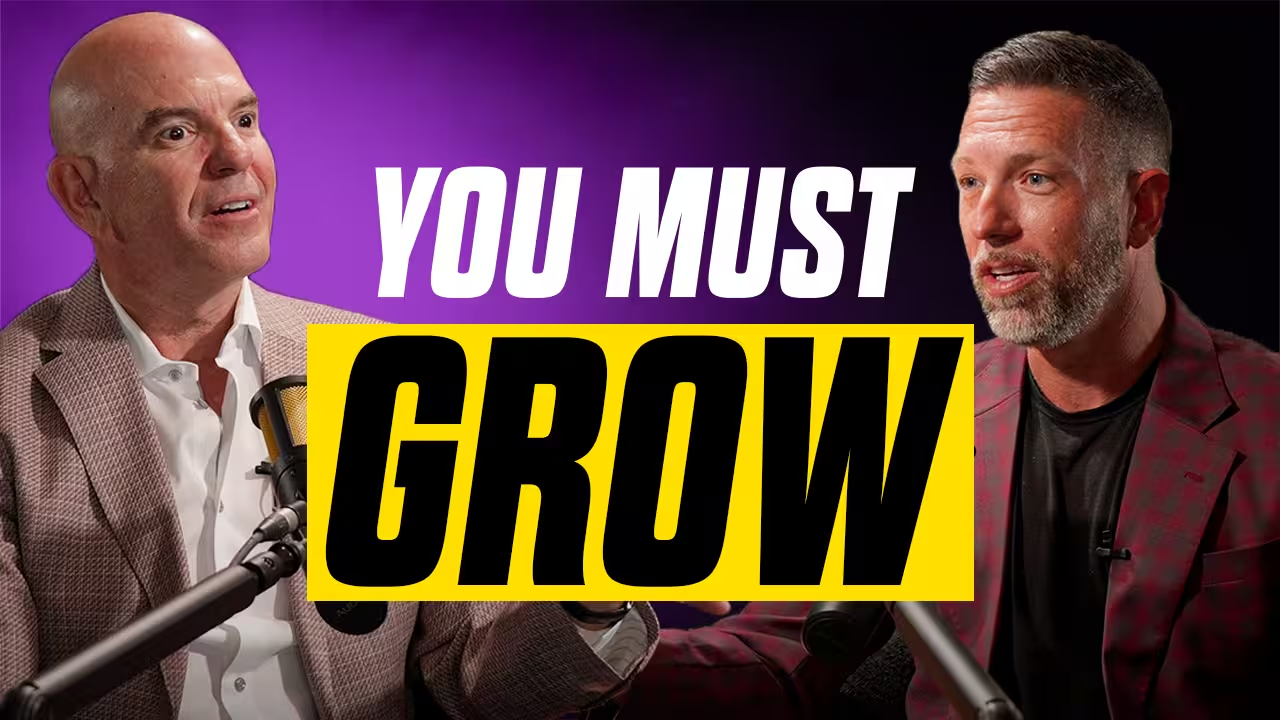
He frames it as a lesson he carries to this day: if you are not uncomfortable, you are not growing. Cold calls that ended in rejection, prospects who told him to get lost, weekend marketing events where he had to approach strangers, he leaned into all of it until the discomfort stopped controlling him. He describes becoming comfortable being uncomfortable, drawn to the hard tasks the way a moth goes to a flame.
The mental model underneath it is durable. Confidence is not a feeling you wait for. It is a callus you build by doing the thing that scares you, over and over, until it no longer does. For students who think successful people feel ready first, the truth is the opposite: they act before they feel ready, and the readiness follows. Mike is not alone in this. Andrew Nigrelli makes nearly the same case in his story on why comfort is costing you your full potential, a useful companion read for anyone who keeps choosing the safe option.
Ready to do what the average person will not? Join the TTPB community and connect with employers who reward drive.
How Do You Push Through When You Are About to Quit?
The proof of Mike's thesis is the year he almost did not survive. The job was full commission, and after his initial network of friends and family ran dry, the money nearly did too. He was grinding from seven in the morning until midnight, taking the late train home so he could keep cold-calling into the evening, running on two energy drinks a day and a sleep aid at night just to reset and do it again. His account was about to go negative, and he did not want to go back to the parents who had supported him and admit he was failing.
Then came the lead that tested everything. He had qualified a promising prospect at a local arts festival, a woman with a large retirement account to roll over. When he finally called to set the meeting, the number was dead. She had given him a fake. Most people stop there. Mike did not. He searched her name and workplace, called the company's main switchboard, and asked to be put through. She picked up. He stayed warm and composed, acted as though nothing was wrong, and booked the meeting for the following week.
He went to that meeting alone, on purpose, because he wanted to own the outcome and prove to himself that with his back against the wall he could close. The case brought in more than 30,000 dollars in commission and changed his trajectory. The lesson is not the money. It is that the gap between average and exceptional often sits at the exact moment a normal person gives up. Steve Schmitt reaches a similar conclusion about the early grind in his story on why most young professionals fail.
Why Does the Front Line Beat the Back Office?
Coming out of school, Mike weighed two paths. One was the safe route: a corporate finance analyst role at a large company with a steady salary and benefits, the option his parents would have preferred. The other was a full-commission, client-facing job with uncapped income and no floor. He chose the harder one for a specific reason.
He paraphrases a line he attributes to Elon Musk: you are compensated based on the complexity of the problems you solve. Mike reasoned that a back-office role makes you replaceable, because a company can hire someone with the same degree and similar experience to do the same work, and pay accordingly. Owning the client relationship is the opposite. It puts you at the front end, where the problems are harder, the income is uncapped, and you are difficult to replace.
For students choosing a first job, the framework is worth borrowing. Safety and replaceability tend to travel together. The roles that feel riskier often carry more upside precisely because fewer people can or will do them. The TTPB job board lists the kind of client-facing, uncapped roles Mike is describing, many of them startup and sales positions with real earning ceilings.
Find a role where the problems are hard and the upside is yours.
How Much Does Your Environment Shape Your Success?
Mike is direct that his drive was not purely internal. When asked how much of his passion came from where he landed, he says a big part of it. He makes a striking admission: he could have been selling vacuums and felt nearly the same fire, as long as the environment was competitive and he could measure his performance against others. The job was not the source of the passion. The culture was.
He traces the habit back to childhood, to a nationally ranked travel soccer team with practices before elementary school, where he tasted state and national success as a ten-year-old and learned what it takes to win as part of a team. The same dynamic carried into his career. A competitive office full of hardworking people who pushed and celebrated each other propelled him in a way a flat environment never would have.
His closing advice ties it together. Surround yourself with a supportive group that knows your goals and keeps pushing you, rather than people who tell you to take the easy exit. Be ready for some of those relationships to sour once you start to succeed. And find a real mentor, someone experienced enough to give advice worth taking, because plenty of people will offer advice that is not. Justin Barbato puts a sharper edge on the same point in his story on why you should not take advice from people who settled.
Questions People Ask About Starting a Commission Career
Is a full-commission job worth the risk after college?
It can be, if you are willing to face discomfort and you understand the trade-off. A salaried back-office role offers stability but tends to pay like replaceable work, because the company can hire someone with the same degree to do the same job. A commission, client-facing role has no floor but an uncapped ceiling, and it makes you hard to replace. Mike Karsa chose the commission path, nearly went broke in year one, and built a book north of 4 billion dollars. The risk is real, and so is the upside.
How do you build a client base when you have no network?
Start with your natural market of friends and family to get a few early meetings, then move to consistent outreach when that runs dry. Mike worked weekend marketing events to generate warm leads and cold-called from a stack of names every evening, staying late to keep dialing. The mechanism is volume plus persistence: more conversations, more follow-up, and a refusal to stop at the first dead end. A client base is built one relationship at a time, not handed to you.
What do you do when you are about to run out of money in a sales job?
Focus on the next action instead of the fear, and chase every lead to the end. When Mike was nearly overdrawn, a key prospect gave him a fake phone number. Rather than move on, he found her workplace, called the main line, reached her, and booked a meeting that became a 30,000 dollar case. The takeaway is not to gamble your rent. It is that in a slump, the disciplined extra effort most people skip is often what turns the corner.
How do you get comfortable with rejection and cold calling?
Treat discomfort as a signal you are growing, and repeat the hard action until it loses its charge. Mike used a daily gauge: if a task felt comfortable, he assumed he was avoiding the work that mattered, so he sought out the uncomfortable calls on purpose. Rejection stops controlling you once you have absorbed enough of it. Confidence with cold outreach is a callus, built through reps, not a trait you either have or lack.


.avif)