



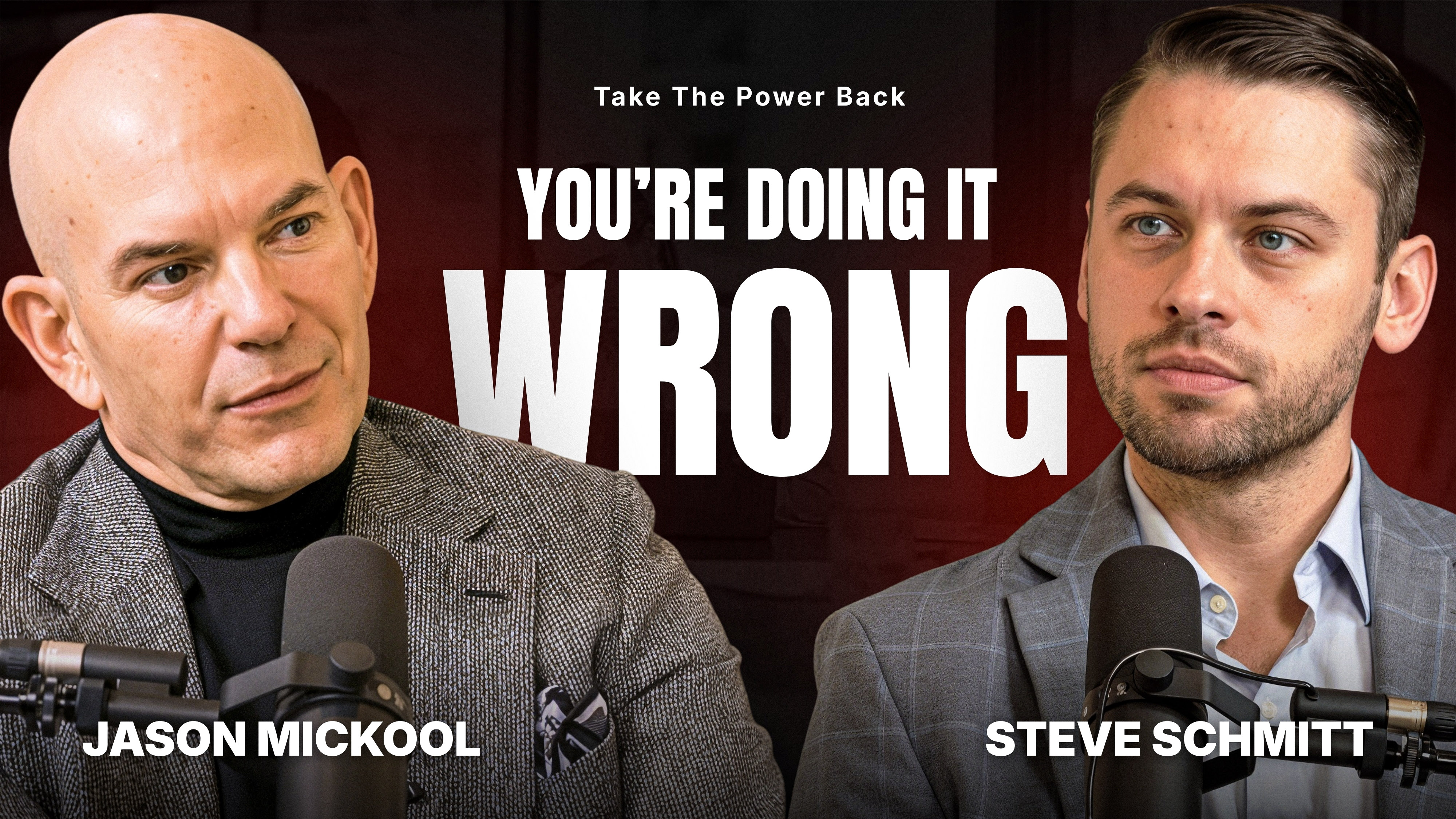
Why Victimhood Destroys More Careers Than Lack of Talent
Steve has managed dozens of advisors over 15 years. He started in a class of 28 people. Most of them are gone. The pattern that eliminated them had nothing to do with intelligence or work ethic.
"People have a tendency to think they're a victim. If something's not working out for them, it's very human nature to just say I'm a victim. I'm being oppressed. Something is causing me to not be able to do the things I need to do."
The problem is not the setback itself. The problem is what happens next. Once someone believes they are a victim, they start rationalizing bad decisions. They stop doing the activities that produce results. They convince themselves that quitting is the right move because the system is unfair.
Steve shares an extreme example from early in his career. A new advisor in the Philadelphia office did everything right. She generated a lead at an event, made the call, booked the appointment, and drove two and a half hours out to Mechanicsburg, Pennsylvania on a Friday night. The location turned out to be an abandoned, boarded-up church. Some small-minded person had given a fake address as a joke.
"At that point, you're a victim of that. You've done everything you're supposed to and it just didn't work out. So you have a decision to make. Am I gonna keep doing this job where I am susceptible to having things happen to me like this?"
The people who survive make a choice. They refuse to let that event define them. They say "next" and keep moving. The people who fail use it as evidence that they were right to quit. Learn more about our mission to connect ambitious students with opportunities that reward persistence over excuses.
How to Make Rejection Stop Mattering
Steve has run approximately 4,300 appointments in his career. Early on, he feared rejection like every new advisor does. That fear is completely gone now. Not because he got tougher, but because he got busier.
"The best thing you can do for yourself is give yourself the ability to be so busy that when people basically just wanna waste your time, you can get to a no quickly because you have so many other things to do."
When your calendar is empty, every rejection feels monumental. When your calendar is full, rejection becomes a minor inconvenience that frees you up for the next opportunity.
His biggest fear today is not hearing no. His biggest fear is wasting hours on someone who was never going to move forward while his family waits at home.
"I have no fear of rejection anymore. The reason I don't is because I value my time a lot more than I value someone telling me no."
The solution is activity. If you have nothing scheduled and very few prospects, every no feels like the end of the world. If you have more opportunities than time, you start hoping certain people say no quickly so you can focus on the ones who want help. Looking for roles where activity gets rewarded? Browse jobs from employers who value hustle over credentials.
Simple Jobs vs Easy Jobs and the Six-Figure Reality
Steve pushes back hard on the assumption that six-figure incomes require elite credentials or complicated work. The reality is different.
"If you're gonna pick a career path and you're gonna try to make six figures in your twenties, there's no easy job to make six figures. But there are simple jobs. Easy and simple are two different things."
Simple jobs have clear activities that produce results. You prospect, you meet with people, you help them make decisions, you get paid. The process is not complicated to understand. But that does not make it easy.
"The reason they're not easy is because you get rejected. You have to do things that are uncomfortable that you've never done before. The hours could be long and they require heavy focus."
He contrasts this with corporate jobs where you can be physically present for eight hours but only do two hours of work. In performance-based roles, those two hours determine your income. The eight hours of presence mean nothing. There is a difference between time and energy. Sitting in your car on I-76 in traffic is time. Running an appointment, answering questions, engaging with a client is energy. Results come from energy expended on key activities, not hours logged. If you want to hear from more professionals who built careers in performance-based fields, book a speaker for your student club or organization.
Why Corporations Pay You as Little as Possible
Steve has a blunt take on corporate compensation that every young professional needs to hear.
"They'll always pay the least amount possible to get somebody to do a job. Every corporation, that's the case. Unless it's a job that nobody can do or wants to do. Unless it's revenue producing and close to the revenue of the firm."
Every business has two sides: overhead and revenue. The closer you are to generating revenue, the more leverage you have. The further you are from revenue, the more replaceable you become. This is why Steve argues that the worst position in corporate America is the $250,000 to $300,000 W2 employee.
"The second there's a merger, an acquisition, or McKinsey or Boston Consulting Group comes in, you are probably getting axed. And then when you're on the street expecting to get that pay again, there's 50 people looking for your job. Someone will take $175,000."
He sees this constantly with his clients. The number one concern among the 4,000+ people he has met with is not stock market volatility. It is getting pushed out of their six-figure job when they have an eight to twelve year runway to retirement. The solution is building skills and relationships that you own. When Steve started his own firm, nobody could take it away from him. That portability and ownership is what creates real security. If you are ready to build something of your own, the Incubator Hub can connect you with resources and community.
The 20% Rule That Changed Everything
Before Steve started his career, his dad connected him with a friend who had spent 35 years as a wirehouse broker doing cold calls. The advice was simple and brutal.
"He said, when you go into a sales program, they're gonna give you some key statistics, like weekly or daily things you need to do. He goes, do 20% above whatever's on that list."
Whatever metrics they give you, exceed them by 20%. If they say make 50 calls, make 60. If they say book 10 appointments, book 12. The people who hit the minimum tend to slip below it. The people who aim higher have a cushion.
The second piece of advice was equally direct: you are going to want to quit every day. It is going to feel weird. Just put your head down and do what they tell you to do.
"He said, if you don't do that, you'll most likely fail out. And then you'll have to go find a completely different job."
Steve did not want to fail out. So he did the work. Fifteen years and 4,300 appointments later, he runs his own firm with a team of 14 advisors and is building toward a billion dollars in assets under management. Have questions about finding the right opportunity? Visit our FAQ page or contact us directly.
Why Do Most Young Professionals Fail in Sales and Performance-Based Careers?
Why do most young professionals fail in performance-based careers?
Most young professionals fail in performance-based careers because they adopt a victimhood mentality when things get hard. Steve Schmitt has observed that people who fail convince themselves they are victims of circumstances, which allows them to rationalize quitting or underperforming. The issue is not entitlement or laziness. The issue is choosing to believe that external factors are preventing success, which leads to bad decisions and ultimately failure. The people who succeed refuse to let setbacks define them and keep executing regardless of obstacles.
How do I stop being afraid of rejection in sales?
You stop being afraid of rejection by becoming so busy that individual rejections no longer matter. Steve Schmitt ran over 4,300 appointments in 15 years and says his fear of rejection disappeared when he started valuing his time more than he valued hearing yes. When your calendar is empty, every no feels devastating. When your calendar is full of opportunities, a quick no helps you by freeing up time for people who want to move forward. The solution is increasing your activity level until rejection becomes a minor inconvenience rather than a career-defining event.
Can you make six figures without an elite degree or connections?
You can make six figures without an elite degree or connections by choosing work that is simple but not easy. Steve Schmitt explains that simple jobs have clear, repeatable activities that produce results. They are not complicated to understand. But they require handling rejection, doing uncomfortable things, working long hours, and maintaining heavy focus. Corporations pay the least possible for roles that anyone can fill. The way to earn more is positioning yourself close to revenue generation where your performance directly impacts results.
Is a high-paying corporate job safe?
A high-paying corporate job is not as safe as most people believe. Steve Schmitt argues that being a $250,000 to $300,000 W2 employee at a Fortune 500 company is the worst place to be. When mergers, acquisitions, or consulting firm restructures happen, highly paid employees are often first to be cut. Then they compete against dozens of other displaced workers willing to accept lower salaries for the same role. True career security comes from building skills, relationships, and potentially a business that you own and control, not from depending on a corporation that can eliminate your position at any time.


.avif)