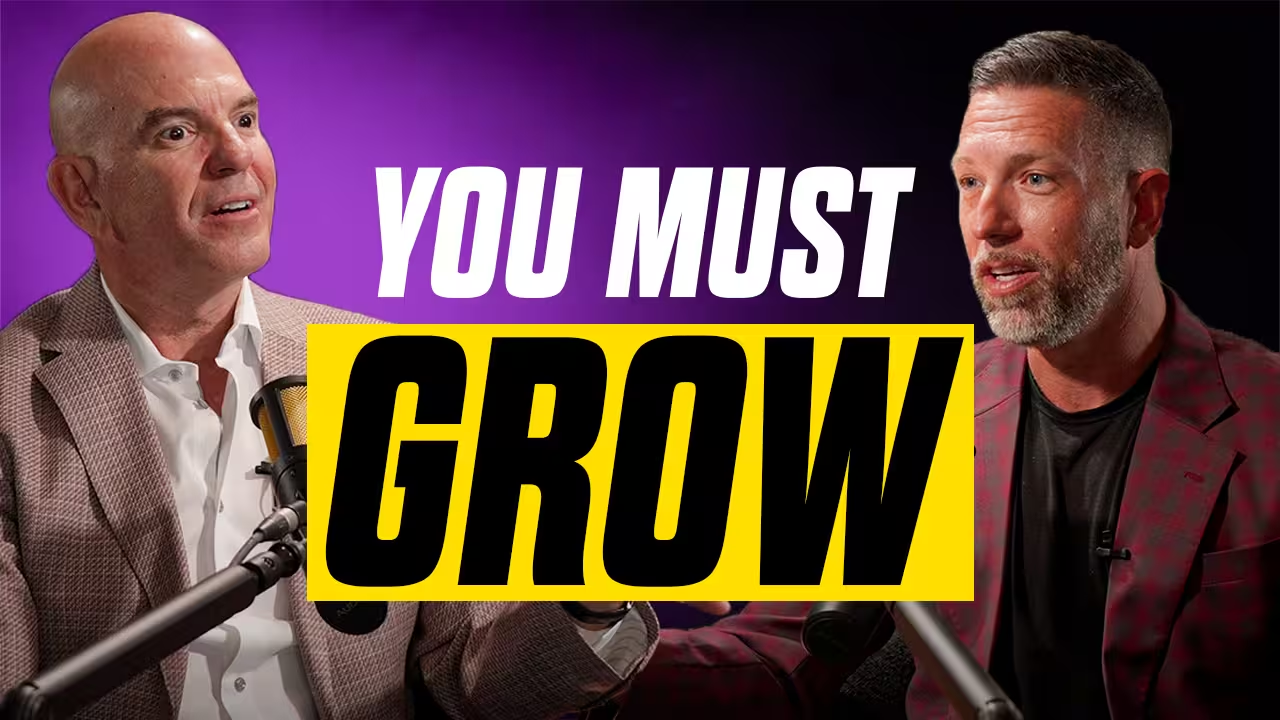




What Ski Racing Taught Him About Failure
Andrew was a Division 1 ski racer at St. Lawrence University. Before that, he attended the Green Mountain Valley School in Vermont, a ski academy where the entire curriculum was built around racing. He had one dream: make the US Ski Team and compete in the Olympics.
He never got there. But the lessons from that failure shaped everything that came after.
"In ski racing, you have to finish two runs, not one. You can ski great in the first run and then if you fall on the second, it doesn't matter. It's like the first run never even happened because you're not on the result sheet. And that happened to me a lot."
The distance between Andrew and the top skiers kept growing. He watched athletes who started from a stronger foundation only get better while he struggled to close the gap. At 16 and 17, he knew the Olympic dream was slipping away.
But his love for the sport never faded. He loved the camaraderie, the training, the challenge of race day. That love is what kept him going even when results did not come. Years later, he realized the same principle applied to his professional life. He was making good money, but the love for what he was doing was not there. And without that love, he was never going to reach his full potential.
The Difference Between a Lifestyle Practice and a Real Business
Andrew spent over two decades as a financial advisor. He built a successful practice, joined one of the largest aggregators as a partner, and eventually sold his firm to Carson in December 2022. By any standard measurement, he had made it.
But something was missing.
"I loved the business, but I didn't love being a financial advisor. I was waking up every day bored. The financial advisory business is so lucrative that most advisors end up in these very lucrative lifestyle practices. It's not a business. It's a lifestyle practice."
The distinction matters. Owning your clients is not the same as owning the platform. True entrepreneurship means managing payroll systems, setting up the technology stack, handling compliance, and building something that can scale beyond your personal capacity to meet with clients. The comfort of a high income became the barrier to building a real enterprise.
Andrew recognized that his comfort zone was costing him. The lucrative practice made it easy to stay put, but staying put meant never scratching the entrepreneurial itch that had been there all along. If you want to explore what building something of your own looks like, learn more about our mission to connect ambitious people with real opportunity.
Why Betting on Yourself Is the Hardest Part
Before buying his current company, Andrew had already experienced significant wins. He was an early investor in 55 IP, a fintech startup using machine learning for tax loss harvesting. That company sold to JP Morgan at the end of 2020 and now manages over $40 billion in assets. He had a successful exit from his advisory firm. On paper, he should have had complete confidence.
He did not.
"Despite a great exit with 55 IP and a great exit with my business, I still struggled a little bit about trusting myself and betting on myself. There was always this thing in my gut that I never felt like I was living up to my full entrepreneurial potential."
Andrew kept gravitating toward larger organizations. When he left Ameriprise for LPL, he joined one of the top five largest RIAs. When he moved again, it was to Carson, another large platform. The pattern revealed something he had not fully admitted to himself: fear. Could he actually go out and build a real business on his own?
In June of this year, he finally answered that question. He and his business partner bought a financial services company with both a wealth management and financial coaching component. He is now working harder than he has ever worked in his life. And for the first time, he looks forward to Mondays.
If you want to explore career paths where your effort determines your ceiling, browse jobs from employers who reward results.
Life Challenges Are Not in the Way. They Are on the Way.
While Andrew was building his advisory business, his first daughter Avery was born with a congenital heart defect. She needed open heart surgery just before her second birthday. During her recovery, doctors discovered additional issues with her heart's electrical system.
Then something unexpected happened. While the doctor was explaining Avery's symptoms, Andrew's wife Jess said she had experienced the same symptoms her entire life. Testing revealed she had the same condition, one of the most complicated cases doctors had ever seen. She underwent four surgeries over two and a half years and is now completely pacemaker dependent.
Throughout all of this, Andrew had a business to run. Clients were still calling. He was sitting in the hospital with his phone, managing a team of two while his family faced life-threatening health challenges.
"As an entrepreneur, you just gotta take your licks and brush yourself off. Life challenges are not in the way. They're on the way."
The lesson: challenges will come regardless of your circumstances. The entrepreneurs who make it are the ones who keep flying the plane even when alarms are going off. Want to hear from more leaders who built careers through adversity? Book a speaker for your student organization or connect with the Incubator Hub to start building your own path.
Your Questions About Reaching Your Full Potential
Why does success feel empty?
You may be optimizing for comfort instead of growth. Many professionals build careers that pay well but never challenge them to build something of their own. Andrew Nigrelli earned excellent money for over 20 years as a financial advisor but woke up bored every day. The lucrative income became a trap that prevented him from scratching the entrepreneurial itch. If you have achieved what others consider success but feel unfulfilled, ask whether your comfort zone has become a ceiling.
Should I take the safe job or the risky opportunity?
Depends on whether you want to build something or just earn a paycheck. Both are valid choices, but they lead to different lives. Andrew Nigrelli, who has built and sold multiple companies including a fintech startup acquired by JP Morgan, points out that owning your clients is not the same as owning a business. True entrepreneurship means taking responsibility for everything: payroll, technology, compliance, and scale. If that excites you more than it scares you, the risky opportunity may be the right path.
How do I handle career setbacks and life challenges at the same time?
Keep flying the plane. When Andrew Nigrelli's daughter needed open heart surgery and his wife required four surgeries over two years for a heart condition, he was still running a business with a team of two. Clients kept calling. The work did not pause for his personal crisis. Life challenges are not in the way of your career. They are on the way. The entrepreneurs who make it are the ones who maintain focus on what they can control even when everything else feels out of control.
H3: How do I know if I should start my own business?
Pay attention to who inspires you. If you are drawn to stories of founders who built companies from nothing, you probably have entrepreneurial drive. If you admire executives who lead large organizations, your path may be corporate leadership. Andrew Nigrelli suggests asking yourself whether the idea of managing payroll, building systems, and taking full responsibility for outcomes excites you or terrifies you. Both answers are useful information about what you should pursue.
Have more questions? Visit our FAQ page or contact us directly.


.avif)