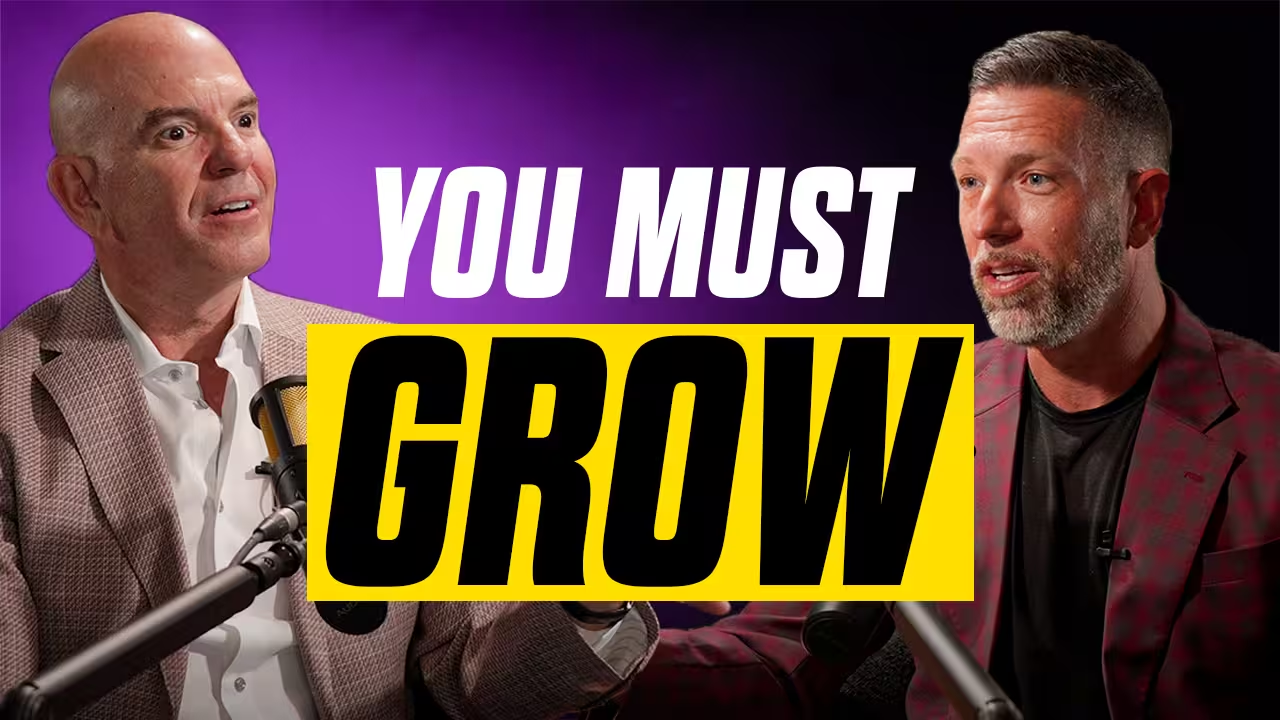




Why the Right Vehicle Matters More Than Effort
Chase believed what most people believe: work harder, succeed more. Coaching proved that wrong. He was the hardest working person on staff and it made no difference.
"I worked my ass off as a college football coach. 80-hour weeks. I worked harder than anybody else. But I got paid the same amount as everybody else."
When his head coach got fired, Chase had a choice: relocate for another coaching job or stay in town and try insurance. He stayed for a girl. The girl did not work out. The career did.
Commission sales changed everything. For the first time, effort connected to income. He could work more and make more. No cap. No waiting for someone to promote him. Learn why TTPB exists to connect students with careers where results are uncapped.
Why Mastering the Process Comes Before Scaling It
Chase started by knocking on 25 doors a day. He had a GPS app with names of people turning 65 in each zip code. Nobody taught him anything else.
Most agents sold one policy per client. Chase figured out how to sell four or five. Same lead, four times the revenue. He calls it packaging: small, medium, or large, each with additional policies bundled in. No client left with just one.
He built that sales process before trying to scale it. Most people do the opposite. They pour money into marketing before they know how to convert.
"I would never want to amplify something that's shitty. Because then I'm just making shit bigger."
The principle applies to any business: optimize the process first, then amplify it with marketing and leads. Reversing the order wastes money. Browse jobs with employers who will teach you how to sell before asking you to scale.
Why Doing Everything Yourself Becomes the Ceiling
For two to three years, Chase ran everything solo. No employees. No overhead. He hoarded the money and beat his chest about it.
He was proud of the wrong thing.
"I was romanticizing things that were holding me back. I have a higher payout. I don't spend money on marketing. When I hear that today, I'm like, you don't have a real business."
People started showing up wanting to work with him. He took 75% of their commission and ran a weekly call. That was it. Then he realized: if he did not do something different, they would leave. The people depending on him needed more than he was giving.
That moment forced him to build systems: lead generation, administrative support, commission payouts, leadership development. The solo operator became a CEO. Book a speaker who can show students what that transition looks like.
Why Winners Empower Others Instead of Hoarding
Chase hit a ceiling he could not outwork. No matter how many hours he put in, there was a limit to what one person could produce.
"I realized that no one had to be as good as me. They just had to be 75% as good as me. And I'll take 20 of those."
The math changes when you stop trying to be the best at everything and start building people who are good enough at the right things. Twenty people at 75% outperform one person at 100%.
Chase also learned something else: the people he developed often surpassed him.
"You're not as good as you think. People can outperform you if you give them the tools and the platform to do that."
That is the quality that separates people who plateau from people who keep leveling up: the willingness to build others instead of protecting your position. The Incubator Hub is for students ready to start building now.
FAQs - What Qualities Make a Winner in Sales?
Do you need a degree to succeed in sales?
No. Chase has a fitness and sport degree he got because football required him to be enrolled. He would not have gone to college without the sport, and the degree played no role in his success. What mattered was finding a career where results are uncapped. Commission-based sales, insurance, real estate, and financial services all reward performance over credentials. A degree does not determine earning potential in these fields. Execution does.
What separates people who scale from those who plateau?
People who scale stop being proud of doing everything themselves. Solo operators often beat their chest about having no overhead, no employees, and keeping every dollar. That pride becomes a ceiling. Scaling requires building systems for lead generation, administrative support, and leadership development. It requires letting go of the belief that no one can do it as well as you. People who plateau protect their position. People who scale empower others to outperform them.
How do you know when to stop doing everything yourself?
When other people start depending on you. Chase ran solo for two to three years before people showed up wanting to work with him. At that point, he had a choice: keep hoarding or start building. He realized that if he did not provide real value to the people joining him, they would leave. The moment you have people depending on you is the moment you need to become a leader, not just a producer. That transition is uncomfortable, but discomfort is where growth happens.
Why does working harder not always lead to more success?
Because some vehicles cap your results regardless of effort. Chase worked 80-hour weeks as a football coach and made $28,000 a year. The person working half as hard made the same. Salaried roles with fixed pay structures do not reward extra effort with extra income. Commission-based careers do. The first step is finding work where results are uncapped. The second step is mastering a process before scaling it. The third step is building people and systems so you are not the ceiling on your own business.
Have more questions? Visit our FAQ page or contact us directly.


.avif)