



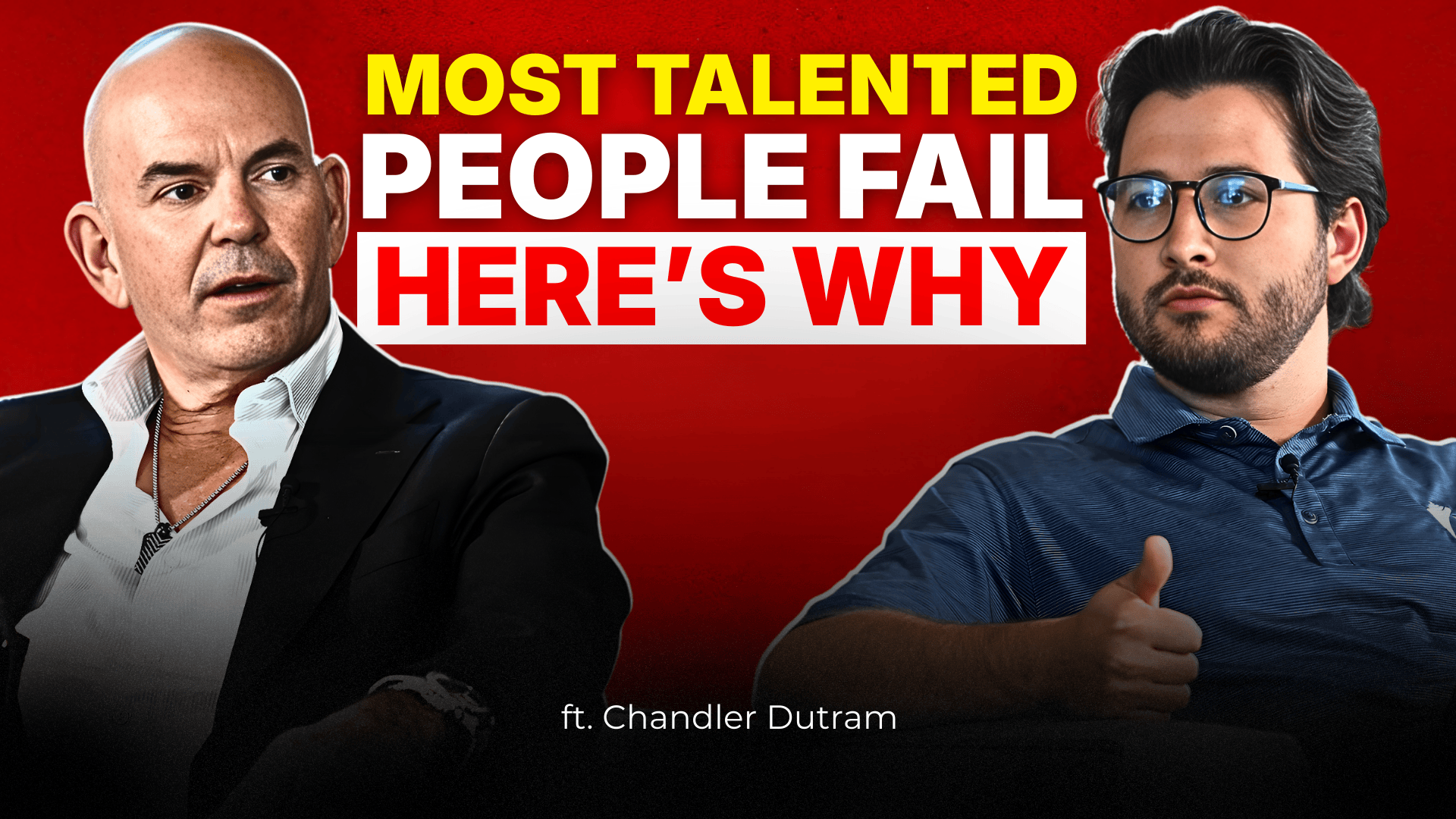
Why Chandler Turned Down a Job From His Own Father
Chandler grew up watching his dad build a career as a financial advisor. He saw the flexibility to attend every game and school event. He saw the family vacations. He saw what financial freedom looked like from the inside.
When he graduated from Florida State with a finance degree, his dad offered him a job. Chandler said no.
"I did not like the idea or the perspective that someone might have from the outside looking in of, oh, he just went and got a job from his dad. I wanted to go and prove to myself that I could go into the industry and have success on my own."
He walked a career fair at FSU looking for something specific: a role where he could work directly with clients from day one. Most firms wanted to stick new hires in back-office roles running reports and building PowerPoints for years before letting them talk to anyone.
"I wanted a role where I was going to be client facing and actually building those relationships from the beginning instead of being more behind the scenes for who knows how long. I mean, now I understand some people stay behind the scenes forever."
He found one company willing to give him that chance. That decision to reject the safe path and demand real responsibility from day one set the trajectory for everything that followed. Learn more about our mission to connect ambitious students with opportunities that don't make them wait.
The Real Reason Talented People Fail
Chandler spent years in leadership roles watching new advisors come and go. He saw people with every advantage flame out while others with no pedigree became stars. The pattern had nothing to do with skill.
"The best answer that I ever came up with was expectations. The people who didn't make it, even the people who I think had the skills, I think they were just expecting the process to go 1, 2, 3."
They expected a straight line. First meeting leads to second meeting leads to signed client. When reality deviated from that script, they broke.
"The success map is like a bowl of spaghetti. Just kind of goes around and around and it goes this way, but eventually you'll find your way."
Chandler watched people fall apart over a single rescheduled meeting. To him, are schedule meant nothing. Book the next one. To them, it was the end of the world.
"If you don't quit, you will be successful. We cannot guarantee you exactly when it will happen. But we can pretty much guarantee it will happen if you keep doing it."
Looking for roles where persistence matters more than a perfect resume? Browse jobs from employers who value grit over credentials.
The Skill That Gets You What You Want
Chandler has a reputation for asking for what he wants. Repeatedly. Even when the answer is no.
"I just have a natural inclination to want to understand why certain things are the way they are. Hey, you miss a hundred percent of the shots you don't take. There's not really any repercussions for the most part. If you just say, hey, I would like this, and someone says no. I didn't lose anything. I didn't gain anything. Let me try asking one more time."
He applied for a leadership position early in his career and got rejected. Someone else got the job. Instead of retreating, he used the rejection as fuel. The next opportunity came, and he was ready.
Most people are wired toward conformity. They avoid situations where someone might say no. Chandler sees it differently: hearing no is proof you are actually reaching for something.
If you want to hear from more people who refused to take no for an answer, book a speaker for your student club or organization.
What Chandler Would Tell His Younger Self
Chandler's advice to Gen Z comes down to two things: believe it is possible, and stop putting deadlines on your dreams.
"If you have a belief that you can or want something, chances are if you actually believe it, it's gonna happen. You just have to want it and then not let yourself get so discouraged if it doesn't happen in the timelines you had thought."
The people who fail put rigid parameters on success. It has to happen by this date or the whole thing is broken. When reality misses their deadline, they convince themselves the goal was never achievable.
"The world is your oyster. It can be whatever you envision, whatever you actually shoot for. But you have to have a bigger vision in order to be there."
If you are ready to build something of your own, the Incubator Hub can help you take the first step.
Your Questions Answered
Why do talented people fail in entrepreneurial careers?
Talented people fail in entrepreneurial careers because they have unrealistic expectations about how success happens. Chandler Duren observed that people who washed out expected a linear path: first meeting, second meeting, signed client. When reality deviated from that script, they broke. Success actually looks like a bowl of spaghetti, twisting in unpredictable directions before reaching the goal. The people who make it are not always the most talented. They are the ones who keep going when things do not follow the plan.
Should I work for a family member or prove myself independently?
Whether to work for a family member or prove yourself independently depends on your personal goals. Chandler Duren turned down a job offer from his father because he wanted to prove he could succeed on his own merit. He did not want anyone to think he was handed his career. This decision forced him to develop skills and confidence he might not have built otherwise. If proving yourself matters to you, independence may be the better path even if the family option is easier.
How do I handle rejection when starting my career?
You handle rejection by reframing it as proof that you are actually reaching for something. Chandler Duren applied for a leadership position early in his career and did not get it. Instead of retreating, he used the rejection as motivation. When the next opportunity came, he was ready. His mindset is simple: asking for something and hearing no costs you nothing. You are in the exact same position as before. So ask again. Things change, timing changes, and persistence often wins.
How long does it take to succeed as an entrepreneur?
There is no fixed timeline for entrepreneurial success, and putting rigid deadlines on your goals can actually cause you to fail. Chandler Duren warns against expecting success by a specific date. The people who quit often do so because reality did not match their timeline, not because the goal was unachievable. If you believe something is possible and refuse to quit, success becomes nearly inevitable. The only variable you cannot control is exactly when it will happen.
Have more questions? Visit our FAQ page or contact us directly.


.avif)